Choose the task before the machine
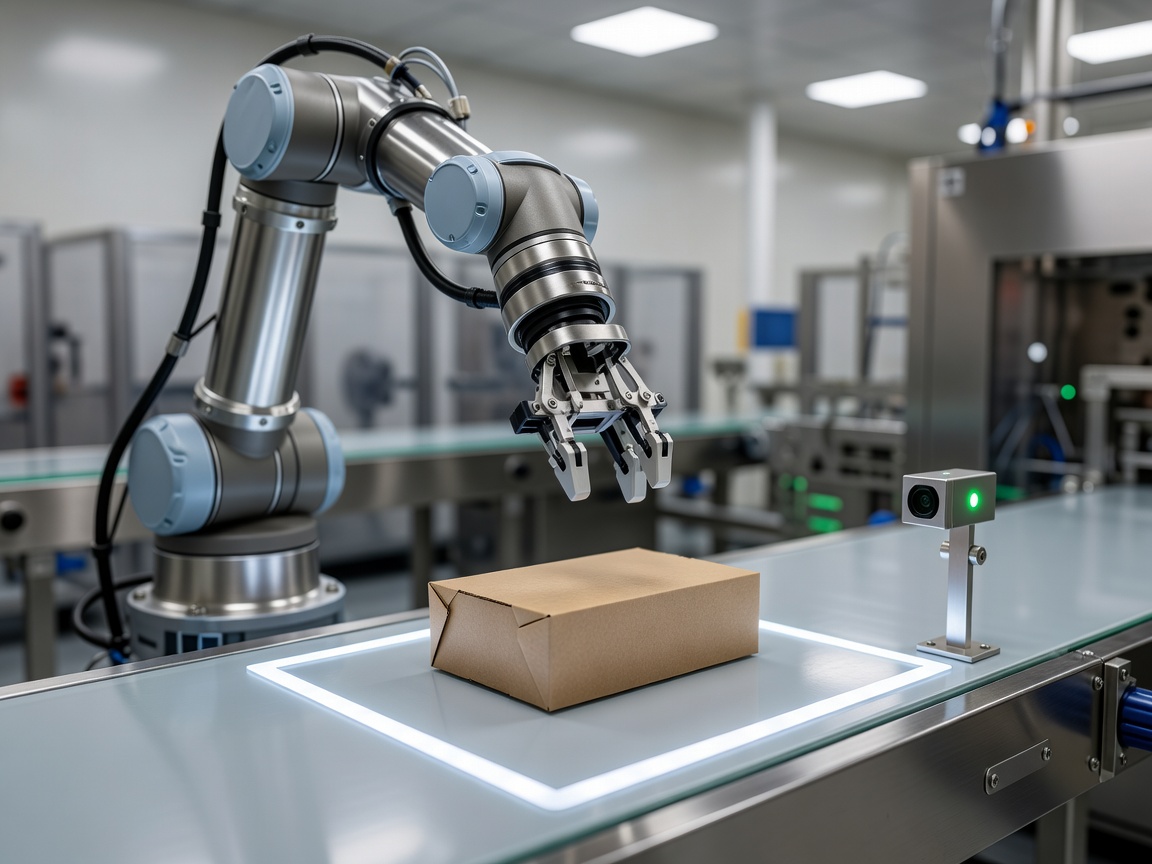
Robotic handling includes several different jobs. A fixed cell may palletise cases in a repeatable pattern. A depalletising system may identify and remove layers or individual cartons. An autonomous mobile robot, or AMR, may transport a load between stations without picking individual products. Each application has different limits, hazards and confirmation requirements.
Begin with the actual load range, required throughput and operating environment. Record case dimensions, weights, packaging materials, pallet patterns and the frequency of exceptions. Average throughput can hide the difficult combination of a dispatch peak and a high proportion of awkward cases. A demonstration using uniform, pristine cartons is not evidence that the system can handle your normal mix.
Make the load predictable enough
A gripper depends on physical properties. Vacuum tools need suitable contact surfaces and adequate seal performance. Mechanical fingers need accessible geometry and acceptable compression forces. Soft packs, wet cartons, damaged corners and loosely secured lids can change the outcome even when the product identifier is correct.
Vision systems help locate loads and estimate orientation, but their performance depends on presentation, lighting, contrast and the validated application. Transparent film, reflections and partially obscured labels can create difficult cases. A confidence score needs a defined operational response: retry, divert for inspection or request assistance. It is not a reason to continue an uncertain grip indefinitely.
Cold environments add further considerations. Condensation can affect optics and packaging surfaces; low temperatures can change materials and reduce battery performance. Cleaning requirements influence equipment finishes, cable routing and access. Where equipment contacts food directly, applicable food-contact requirements need separate attention. A machine suitable for sealed cartons is not automatically suitable for unpackaged food.
Agree the receiving conditions
Before transfer, the receiving conveyor, pallet position or workstation must be ready. A useful handshake distinguishes permission to send, load in transit and receipt confirmed. If the downstream station becomes unavailable midway through a transfer, the system needs a controlled response that protects both the load and nearby people.
For palletising, consider stability across the complete pattern rather than evaluating each carton placement alone. Mixed sizes and weight distributions can produce an unstable pallet even when every pick succeeds. Wrapping, labels and subsequent forklift handling belong in the acceptance test because the pallet still has a journey after it leaves the robot.
- Verify presentation
- Check receiving space
- Transfer under control
- Confirm load and state
For mobile transport, map shared areas, crossings, doors and docking interfaces. A route that is technically navigable may still be unsuitable during cleaning, maintenance or heavy pedestrian activity. Operational rules and physical layout must support the navigation system.
Keep safety independent of optimism
A collaborative robot is not automatically a safe application. Risk depends on the complete system, including the tool, payload, motion, surroundings and foreseeable human interaction. Sharp packaging, trapping points and falling loads can matter as much as the robot arm itself. Safety functions require appropriate design and validation by competent people.
ISO 12100 sets out machinery risk assessment and risk reduction principles. The ISO 10218 series addresses industrial robot safety, and ISO 3691-4 addresses driverless industrial trucks and their systems. Determine the applicable editions, legislation and application boundaries with qualified specialists. A reference to a standard is not a substitute for conformity work or a site assessment.
Test the recovery, not only the cycle
Acceptance testing should include missed picks, unreadable labels, skewed cartons, unavailable destinations and communication interruptions. Check how the system reports each condition and how much trained intervention it needs. A machine with an impressive nominal cycle can still reduce effective throughput if small disturbances repeatedly require lengthy recovery.
Track successful confirmed transfers, product damage, intervention frequency, recovery duration and downstream quality. Separate the machine’s running speed from the complete station’s useful output. Include cleaning, planned maintenance and changeovers in capacity planning instead of treating them as unexpected losses.
The final handoff returns us to the atlas’s central rule: physical movement and information must agree. The load should be where the record says it is, in acceptable condition, with no hidden unresolved task. That is a better definition of smart handling than a robot simply moving quickly.
Reference points
ISO 12100: machinery risk assessment
ISO: search the current ISO 10218 and ISO 3691-4 standards
Ireland’s Health and Safety Authority: warehousing